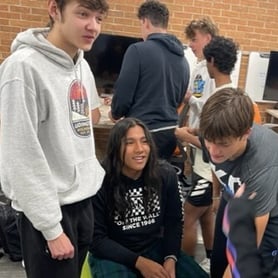
 As another school year is kicking off, we're celebrating educators who create opportunities for students to connect learning to the real world. Through entrepreneurship, students test ideas, share their thinking, receive feedback, and decide how to move forward. Entrepreneurship experiences like INCubatoredu, mxINCedu, and freshINCedu vary by grade level, but they share a common characteristic: students engage with the real world, and this brings meaning and purpose to the experience.
Sound appealing? As an educator, what does it take to embrace this? These are educators willing to create learning environments that are often less predictable, more collaborative, and more connected to their own communities. Volunteer coaches and mentors are a part of the 'teaching team' which is valuable not just for the students but to the business leaders and community members who interact with students as well.
Real-World Experiences and Skill Building
For Roger Lane, a first-year INCubatoredu teacher at Palatine High School in Illinois, one memorable moment came from a student team that launched a candle business.
 The students identified an opportunity on their own to sell their products at a local homeowners convention. The event wasn't part of the curriculum, but both Lane and the team's mentor encouraged them to pursue it. They arrived with 75 candles. By the end of the day, they had sold every one.
The experience required students to pitch their product to strangers, answer questions they hadn't anticipated, and adapt throughout the day. The work and effort were key parts of these students’ learning journey.
Nicole Franczvai, who teaches INCubatoredu at Lewisville High School in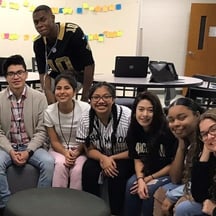 Texas, sees students encounter similar moments throughout the year as they work with mentors. They share hurdles and seek guidance as they navigate problem identification, solution testing, and team conflicts, often building lasting relationships and social capital with the adults in their community.
Franczvai shared, "When I get them, they have a hard time looking someone in the eye." Months later, many of those same students are leading conversations with mentors and presenting ideas with far more confidence than they thought possible.
How Connections Deepen Learning
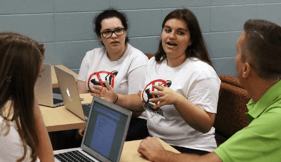 Franczvai has seen mentors become an important source of encouragement and perspective for students. One mentor helped a student find the confidence to stand on stage and speak publicly about his mother's passing. Another mentor connection helped a student navigate and the ever-complicated college admissions process, and sharpen communication skills along the way.
Peer-to-peer connections can be powerful, too. At Poplar Grove Middle School, Deborah Shuler has seen great outcomes through a similar dynamic. High school students from INCubatoredu work with middle school teams as they prepare their pitches. This peer-to-peer feedback and learning from the ‘big kids’ carries weight and helps strengthen the ideas.
A similar learning scenario can appear in elementary school with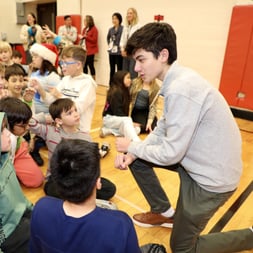 freshINCedu. At Wake County Public School System, students shared ideas with older middle school students who were engaged in mxINCedu and were given feedback through the lens of curiosity rather than criticism, says teacher Daniel Gridley, freshINCedu teacher at Conn Magnet Elementary School.
Across grade levels, entrepreneurial learning creates opportunities for students to learn alongside people and peers who bring different experiences, perspectives, and questions to the conversation.
The Shift From Instructor to Guide
Creating these experiences requires educators to think and teach differently.
For Abbey Deain, who teaches mxINCedu at Lake Zurich Middle School South, one of the most rewarding parts of leading the mxINCedu program is watching students take increasing ownership of their work.
"Students are taking control of their learning and driving their path forward while I am just the facilitator."
That role often means responding to ideas with questions rather than answers.
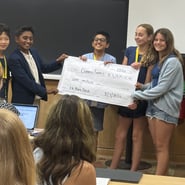 When students bring forward a business concept, Deain asks them to think through the problem they're solving, the audience they're serving, and the assumptions they're making. Students are responsible for evaluating the idea and deciding what to do next.
First-year INCubatoredu teacher Roger Lane describes a similar shift.
"This class calls for a more supportive/facilitating type of teacher than a 'follow the leader' type of classroom learning model."
Students pursue opportunities their teachers never anticipated. Some ideas gain traction. Others don't. Some teams change direction entirely.
Franczvai captures that reality with a phrase that feels familiar to many entrepreneurial educators:
"I've always taught in chaos but this is chaos with a plan forward."
In this environment, the teacher's role is to create the conditions in which students can navigate challenges and opportunities, and to build connections with those around them who can provide support.
Why It Matters to Start Early
Uncharted Learning programs provide a clear progression in experiences, learning, and skill-building.
In elementary school, students are already learning how to share ideas, listen to another perspective, and offer constructive feedback. Gridley's students practiced those skills while interacting with older learners and discussing one another's work.
.jpg?width=211&height=211&name=2020-2-2%20Corkscrew%20Middle%20School%20Pop-up2%20(2).jpg) In middle school, those entrepreneurial experiences progress. Students present ideas, refine pitches, and learn how to respond when someone challenges their thinking. Shuler has watched students gain confidence through those interactions, while Deain has has seen students get in touch with interests and strengths which is so beneficial.
In middle school, those entrepreneurial experiences progress. Students present ideas, refine pitches, and learn how to respond when someone challenges their thinking. Shuler has watched students gain confidence through those interactions, while Deain has has seen students get in touch with interests and strengths which is so beneficial.
By high school, students are working closely with mentors, identifying opportunities, out in the community gathering feedback, and making decisions.
Students are building skills and ‘entrepreneurial muscle’ through repeated opportunities over the years to contribute ideas, receive feedback, and learn from the people around them.
Expanding What Learning Can Look Like
A candle convention. A mentor conversation. A high school student helping a middle school team strengthen a presentation.
The examples in this articles share a common thread.
Each reflects an educator who intentionally created space for learning to extend beyond traditional classroom boundaries.
As the school year kicks off, these and other educators deserve recognition. Not simply for teaching content, but for creating experiences that connect students with new people, new perspectives, and new possibilities.
In doing so, they continue expanding what learning can look like. Contact us to learn more about what entrepreneurship could look like for your students.


