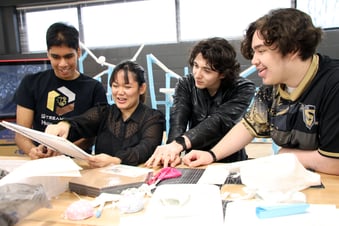
 After more than two decades working in experiential education, I've come to believe that some of the most consequential learning happens when students are asked to do something that matters beyond the classroom. They might be tackling a problem without an obvious solution, collaborating with people who bring different perspectives, or discovering that a promising idea doesn't work and figuring out what to do next. These experiences develop skills, certainly, but they can also change how young people understand themselves and their place in the world.
That connection between experience and self-discovery is central to an increasingly important idea in education: career literacy.
Career Literacy in a Changing World
The DeBruce Foundation defines career literacy as "the ability to make informed, adaptable decisions about your career over time." It encompasses understanding one's interests and abilities, recognizing opportunities, communicating one's value, and making decisions as circumstances change. Rather than preparing for a single occupation, career literacy equips individuals to navigate a lifetime of work.
“Work is changing faster than ever, and the people who succeed are not simply those who pick the right first job – they are the people who understand how to navigate a lifetime of work.”
— Dr. Leigh Anne Taylor Knight, Executive Director and COO, The DeBruce Foundation
The importance of this capacity is becoming increasingly clear. According to the OECD's 2025 report, The State of Global Teenage Career Preparation, 39% of 15-year-olds across OECD countries were uncertain about their career expectations in 2022, double the proportion less than a decade earlier. One-third also did not agree that school had taught them things they could use in a job. The findings suggest a growing disconnect between students' education, their aspirations, and their understanding of the opportunities available to them.
Artificial intelligence adds another layer of complexity. The World Economic Forum's Future of Jobs Report 2025 reports that employers expect 39% of workers' existing core skills to change by 2030, driven by technological advances and other economic forces. For students entering the workforce years from now, understanding specific careers remains important, but so does developing the ability to recognize their strengths, learn new skills, and adapt as opportunities change.
Recent research from The DeBruce Foundation captures how young people are experiencing this uncertainty. Its 2026 study, How to Talk with Youth About Careers in the Age of AI, found that 85% of young people ages 16–24 are at least somewhat confident they will achieve their career goals, yet only 11% have a very clear understanding of how to prepare. Sixty percent expect AI to shrink or eliminate career opportunities they might otherwise pursue.
There is something striking about that combination of optimism and uncertainty. Young people remain hopeful about their futures, even as the pathways toward those futures become less predictable.
DeBruce's research also suggests that career literacy can make a meaningful difference. Its 2026 report, Career Literacy and Employment Security in the U.S., draws on approximately 36,000 responses and finds that higher career literacy is associated with exploring a wider range of employment opportunities and experiencing greater employment security.
For educators, these findings point toward an important responsibility. We cannot give students a reliable map of the careers they will encounter throughout their lives. We can, however, help them develop the understanding, resourcefulness, and confidence to find their way.
From Learning Skills to Recognizing Strengths
There is an important difference between telling a student that communication is valuable and asking that student to persuade someone to support an idea. The same is true of teaching collaboration versus asking a team to make a difficult decision when its members disagree, or discussing resilience versus experiencing the frustration of a promising idea that doesn't work. Both instruction and experience matter, but experience gives students something instruction alone cannot always provide: an opportunity to see their abilities in action.
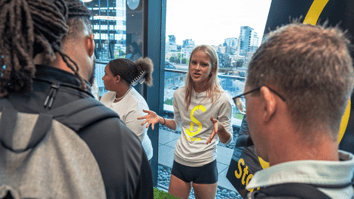 Consider a student in an entrepreneurship course interviewing potential customers about a problem worth solving. The student must listen carefully, ask thoughtful questions, interpret sometimes contradictory information, and reconsider initial assumptions. Perhaps the original idea turns out to be less promising than expected. From an entrepreneurship perspective, that's customer discovery. From a career literacy perspective, the student is learning how to engage with people, evaluate information, and respond when expectations don't match reality.
The educational value extends beyond completing the assignment. With opportunities for reflection, students can begin to recognize the abilities they used, understand where they encountered difficulty, and articulate what they might bring to another challenge. An experience that began as a business project becomes a source of insight into how they think, work, and contribute.
This is an important distinction. Career literacy isn't developed simply by exposing students to different occupations. It grows as they begin connecting what they know about themselves with what they encounter in the world.
Connecting Agilities to Authentic Learning
The partnership between Uncharted Learning and The DeBruce Foundation brings this connection to life.
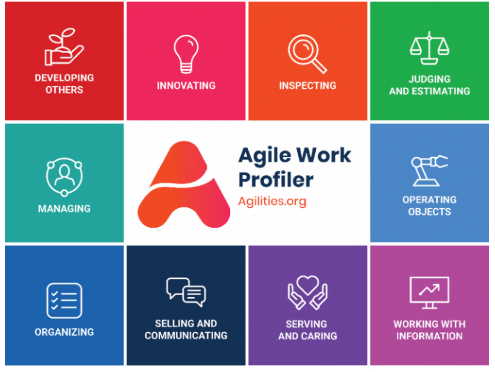
DeBruce's AgilitiesTM framework provides a way for students to recognize and describe the kinds of work they enjoy. Through the Agile Work Profiler™, students explore ten Agilities, including Innovating, Organizing, and Selling and Communicating. Rather than directing students toward a particular career, the profiler helps them identify work-related interests that can serve as starting points for exploration.
Uncharted Learning's entrepreneurship programs create opportunities to explore those interests through authentic work. Across mxINCedu, entreINCedu, and INCubatoredu, Agilities are integrated into learning experiences that encourage students to apply their abilities, encounter new challenges, and reflect on what they discover.
In mxINCedu, middle school students engage in entrepreneurial activities that build creative thinking, teamwork, and communication. In entreINCedu, students investigate community problems, interview potential customers, develop solutions, and present their ideas, drawing on Agilities such as Working with Information, Innovating, and Selling and Communicating. Through INCubatoredu, high school students undertake the sustained work of building business ventures, collaborating with mentors, responding to feedback, and pitching to authentic audiences.
The DeBruce Foundation’s Agile Work Profiler
The 10 Agilities
These experiences become increasingly complex, but the underlying opportunity remains consistent: students discover something about themselves through the work.
The goal isn't necessarily to develop future entrepreneurs. It's to help young people recognize abilities they can carry into many different fields. A student who enjoys organizing a team might discover an interest in project management or healthcare. Another who finds satisfaction in understanding customers might begin exploring research, communications, or human-centered design.
The partnership creates a meaningful relationship between self-awareness and application. DeBruce provides a framework for identifying interests, while Uncharted Learning gives students opportunities to investigate how those interests translate into capabilities. Reflection connects the two, helping students develop a more informed understanding of their potential.
Human Connections Expand What’s Possible
Career literacy also depends on the people and opportunities students encounter. DeBruce's research identifies network strength, alongside career literacy, as an important contributor to employment empowerment. That finding resonates with my experience in education, where relationships often become an unexpected source of learning.
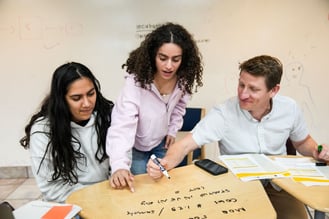 When students work with professionals, mentors, entrepreneurs, and community members, they gain access to perspectives that may be missing from their everyday lives. A conversation can challenge an assumption about a profession. A mentor might recognize an ability a student has overlooked. An entrepreneur might share a career path a student never imagined.
These encounters are particularly valuable for young people whose existing networks offer limited exposure to different industries or career pathways. Authentic learning can broaden their understanding of what's possible while giving them direct experience working alongside others.
In entrepreneurship education, these relationships are part of the learning itself. Students learn to ask questions, seek feedback, and build connections that can open doors to opportunities they might not otherwise have considered.
Preparing Students for Futures We Can't Predict
As AI transforms the workplace and traditional career pathways become less predictable, that capacity will only grow more important. Students will need to continue learning, reconsider assumptions, and recognize opportunities that may not have existed when they were in school.
Our responsibility as educators is not to predict those futures for them. It is to create the conditions in which they can discover what they have to offer and develop the confidence to keep growing.
The goal isn't simply to help students answer, "What do I want to be?"
It's to help them recognize what they're capable of becoming—and give them the confidence to keep discovering.
Research and References
-
The DeBruce Foundation (2026). Career Literacy and Employment Security in the U.S.
-
The DeBruce Foundation (2026). How to Talk with Youth About Careers in the Age of AI.
-
OECD (2025). The State of Global Teenage Career Preparation.
-
World Economic Forum (2025). The Future of Jobs Report 2025.
-
The DeBruce Foundation (2025). Employment Empowerment Study.


