Being Treated Like Professionals Changes Everything
 One of the most powerful shifts students experience in an INCubatoredu entrepreneurship classroom doesn’t come from a lesson plan or a pitch deck. It comes from how they’re treated. Amy Schroeder, a long-time INCubatoredu mentor who has worked with students at Elk Grove High School, Prospect High School, and Oak Park and River Forest High School, sees this shift firsthand when mentors enter the room and students aren’t approached as kids completing an assignment, but as professionals doing real work — and that distinction matters.
As one mentor explained, the way she interacts with students mirrors how she works with entrepreneurs in her professional life:
“We work to instill confidence early on, as presenting to 'sharks' and competing with other teams can be intimidating. We try to be positive yet firm. We speak to students directly—coaching and guiding them the way we would any entrepreneur. Because at the end of the day, they’re doing the same work as founders out in the world.”
That mindset shows up in the feedback students receive, the questions they’re asked, and the expectations placed on them. There’s no artificial softening of standards, and no sense that this is a simulation.
“We’re giving them advice we would be giving someone else in our workspace or that we’re investing in.”
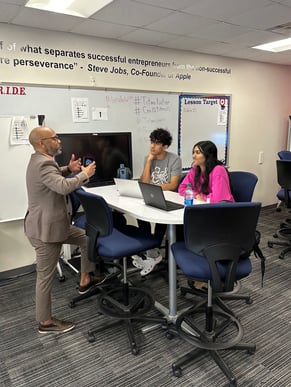 When students realize their ideas are being taken seriously — evaluated thoughtfully, challenged honestly, and discussed with real-world context — something changes. The work becomes more than school work, it becomes theirs.
Over time, that seriousness reshapes how students show up.
They speak differently. They make decisions with more confidence. They become more comfortable engaging with adults as peers in professional conversations.
“By the end of the school year, they’re so much more confident. They’re more comfortable talking to adults, presenting, and making decisions.”
Confidence, in this case, isn’t handed out as encouragement alone. It’s earned through experience and through being trusted with real expectations and rising to meet them.
When students are treated like professionals, they begin to see themselves that way. And once that shift happens, everything else builds from there.
Career Exposure Rooted in Real Work
Once students are treated like professionals, something else follows naturally: they become genuinely curious about the work itself.
Not in an abstract way. Not through job titles or career-day conversations. But through sustained exposure to how work actually happens, how decisions are made, how roles intersect, and how experience shapes judgment.
When mentors step into the classroom, students don’t just hear about careers. They engage with people who are living them.
“The students end up asking a lot of questions about my background, the clients I work with, and what business is really like. They get really curious.”
That curiosity deepens as students realize that professional work isn’t siloed. What looks like a single role on paper often draws from many disciplines at once.
“Even though my background is finance as a CFO, I’ve helped set company strategy, and worked with marketing, operations, human resources — all the different disciplines. As you advance, you’re expected not just to understand how teams work together, but to collaborate across disciplines to achieve company goals."
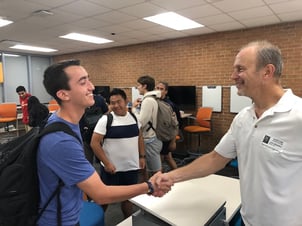 For students, this kind of exposure reshapes how they think about careers. They begin to see work not as a set of rigid paths, but as a collection of skills, perspectives, and decisions that evolve over time.
What stands out most is the level of thought students bring to those conversations.
“It’s so cool to hear them ask ridiculously smart questions, knowing they’ve never really been in the business world.”
That thoughtfulness is earned through proximity and being close enough to real work to understand its complexity.
“Being able to talk to people who’ve had real-world experience for 30 or 40 years, it’s invaluable and builds social capital. It’s not anything you could read in a book and learn.”
Career exposure, in this context, isn’t about helping students choose a job. It’s about helping them understand how work works—and where they might one day fit into it.
High Expectations Are Part of the Support
Being treated like a professional doesn’t just change how students are seen. It changes what’s expected of them.
INCubatoredu mentors don’t lower the bar to make the work easier. They raise it — and then stay close enough to help students reach it.
As Amy describes it, support and challenge aren’t separate ideas. They show up together.
“We push them, and we’re positive, and we encourage them not to be afraid.”
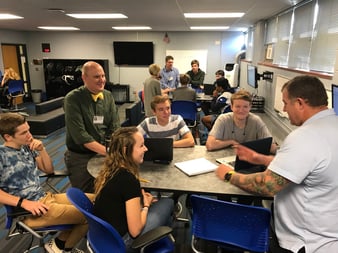 That balance matters. Students are expected to take ownership of their work, to speak with confidence, and to stand behind their decisions — but they’re also reminded that growth requires discomfort.
Those expectations extend beyond the business idea itself. They shape how students learn to work with one another. In team settings, mentors pay close attention to dynamics — not to manage them, but to help students manage themselves.
“If anyone’s feeling resentful or like they’re carrying the load, they have to communicate that. It’s up to them to rebalance and bring everyone’s strengths to the table.”
Students learn that entrepreneurship isn’t just about big ideas. It’s about responsibility, communication, and follow-through.
“Learning how to work on a team — whether it’s for college or the real world — that’s invaluable to your success and your reputation.”
What emerges is a kind of confidence that isn’t performative. It’s built through accountability, shared effort, and the experience of being held to standards that matter.
High expectations, in this context, aren’t pressure. They’re a signal of belief — and students respond accordingly.
The Real Outcome Lives Beyond the Business Idea
Not every student leaves the classroom planning to become an entrepreneur. Not every idea moves forward. And not every pitch earns funding and accolades.
What endures is the experience of doing real work alongside adults who take that work seriously.
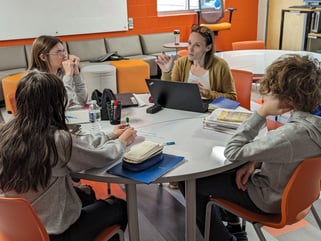 Through consistent feedback, honest expectations, and real accountability, mentors help students understand that success isn’t just about having a strong idea. It’s about showing up, contributing meaningfully, and respecting the people you’re working alongside.
Along the way, students build confidence that isn’t tied to a grade or a role. It comes from experience — from navigating uncertainty, responding to feedback, and staying engaged when the work gets hard.
Those lessons shape how students approach what comes next, long after the class concludes.
The venture may change. The learning stays.
Learn more about INCubatoredu and the role mentorship plays in student learning and career-readiness.



